How to Switch Your Dog's Food Without an Upset Stomach
PawPicked is reader-supported: we may earn a commission from links on this page.
A new bag of food arrives and the old one is nearly empty. The tempting move is to swap overnight. Most dogs can cope with a gradual change, and many struggle with an abrupt one, so the sensible approach is to blend the two over a week or two. This is how to do it, and how to tell when it is not going well.
Before you start
Check three things first.
- The new food is complete and suits the life stage. A puppy food for a puppy, an adult food for an adult. Our guide to reading a dog food label covers how to check.
- Your dog is well. Do not change food during a stomach upset, a course of medication, boarding, a house move or any other upheaval. Wait until things are calm.
- You have enough of the old food. Running out halfway forces a rushed switch. Keep a few days of the old food spare.
Pick your pace
Most dogs need a few days to a week. Dogs with sensitive stomachs, small dogs, seniors and any dog that has had tummy trouble before usually do better with the longer plan. If the new pack gives its own schedule, follow it. The listing for Forthglade Cold Pressed Dry (Chicken & Vegetables), for example, advises introducing it "gradually over two weeks, starting with a 50/50 mix with the current food and slowly increasing the ratio" of the new food. That is a manufacturer's method, and it starts at a higher share of new food than many guides suggest.
The table below is a general plan with the share of the new food and the days to hold each step. The stages in between are a sensible default rather than anything a particular brand has set.
| New food share | Standard plan | Careful plan |
|---|---|---|
| 25% | Days 1 to 2 | Days 1 to 4 |
| 50% | Days 3 to 4 | Days 5 to 8 |
| 75% | Days 5 to 6 | Days 9 to 12 |
| 100% | Day 7 | Days 13 to 14 |
The steps
- Weigh the daily amount. Work out the total your dog gets in grams, using the feeding guide on the new pack as a cross-check. Scoops drift, scales do not.
- Split it by the current step. At 25% new, a dog on 300g a day gets 75g of new food and 225g of old. Keep the total the same and mix thoroughly so your dog cannot pick out the favourite.
- Keep meal times and treats steady. Change one thing at a time. If the treats change as well, you will not know which caused a problem.
- Hold each step until stools are normal. If they soften, drop back to the previous step for a day or two rather than pressing on.
- Move to 100% and keep watching. Look at stools for another week. Some dogs only show a reaction once they are on the full amount.
- Keep water available. It matters more when the diet is changing.
Harder switches
Some changes ask more of the gut than others. Moving between two foods that are close in recipe, such as one chicken kibble to another, is usually easier. Moving between very different recipes is the case for the careful plan.
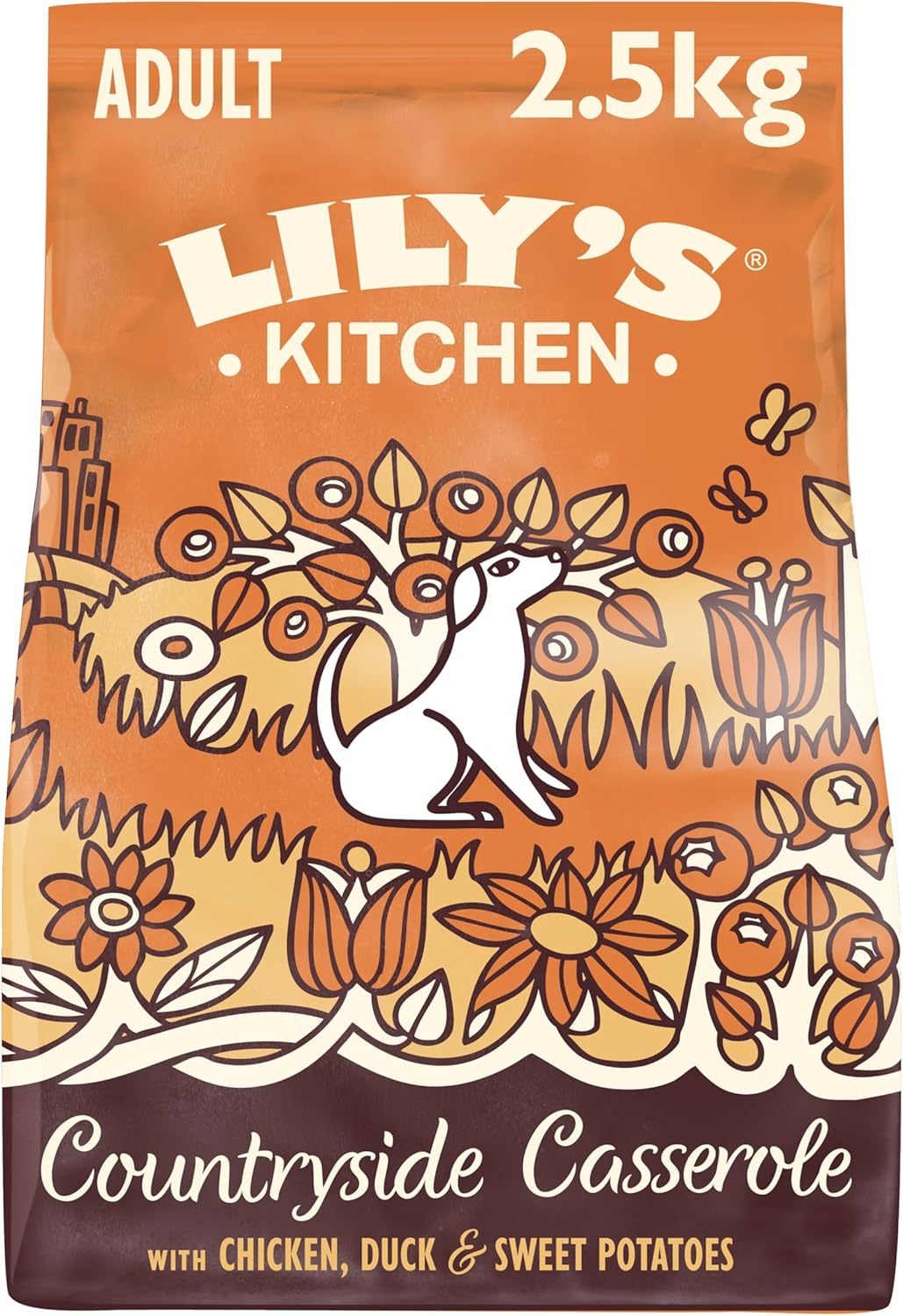
A real example is going from Burns Original Adult & Senior Chicken & Brown Rice to Lily's Kitchen Adult Chicken & Duck Grain-Free. Going by the listed ingredients, the first is led by brown rice at 67%, while the second is led by fresh chicken at 31% and freshly prepared duck at 8%, with sweet potatoes at 29%, whole peas and lentils. That swaps the carbohydrate source, changes the protein mix and adds a new meat. None of that makes it a bad idea, but it is the kind of change where taking two weeks makes sense.
If you are adding wet food at the same time as changing the kibble, do one change and then the other. Our guide to mixing wet and dry food explains how to count both in the daily total.
What to watch for
A slightly softer stool for a day or two is common and often settles. Keep an eye on:
- stool consistency, and how often your dog needs to go
- appetite, and if your dog is eating the mix or leaving the new food
- vomiting, gurgling or obvious discomfort
- itching, ear scratching or paw licking, which can show up more slowly
A dog that refuses the new food is a common problem. Do not make the dog go hungry to force the issue. Slow down, mix in a little more of the old food, and try again over a few days.
When to stop and call the vet
Go back to the old food and ring your vet if your dog has repeated vomiting, diarrhoea that lasts more than a day or two, blood in the stool, is unusually tired, or will not eat for more than a day. Puppies, small dogs and older dogs can become dehydrated faster, so act sooner with them. This guide is general information and does not replace advice from your vet. Our page on what to do about dog diarrhoea sets out what is reasonable to do at home and what is not.
Products in this article


Affiliate links — we may earn a small commission at no extra cost to you.