How to Read a Dog Food Label in the UK
PawPicked is reader-supported: we may earn a commission from links on this page.
The front of a dog food bag is advertising. The useful part is the small print on the back, and most of it can be read in a couple of minutes once you know the order to take it in. This guide uses the listed ingredient panels of three very different dry foods as worked examples: Burns Original Adult & Senior Chicken & Brown Rice, Orijen Original Adult and Harringtons Complete Adult Lamb & Rice. Everything quoted comes from their Amazon.co.uk listings, so check the pack in your hands, because makers do change recipes.
Is it complete? Check that first
A food sold as "complete" is meant to supply everything a dog needs when it is fed on its own, in the right amounts. A "complementary" food is not. It is meant to be fed alongside something else, and treats, toppers, mixers and some wet foods fall into this group. The pack should say which it is, and if it does not say clearly, treat that as a reason to look elsewhere.
Next, check the life stage. A puppy food, an adult food, a senior food and an "all life stages" food are built for different jobs. The Burns listing describes its recipe as a "100% complete food for adult and senior dogs of all breeds", and Harringtons has "Complete" in the product name. The Orijen listing says "All Breeds, All Life Stages" but does not use the word "complete" in the text we have, which is most likely a listing quirk. The bag's statement is the one that counts.
Reading the ingredient panel: three worked examples
Ingredients are normally listed in descending order of weight, heaviest first. Where a pack emphasises a particular ingredient, it usually shows a percentage next to it. That gives you something to compare.
The Burns panel is short: brown rice (67%), dried chicken (20%), oats, peas, chicken oil, sunflower oil, seaweed (0.5%) and minerals. Rice leads by a wide margin, and the chicken is a dried ingredient at 20% of the finished food. That is a simple recipe, but it is a rice-led one.
The Harringtons panel opens with "lamb & meat meals 28%", and the brackets matter: they include dried lamb at 7% and freshly prepared chicken at 4%. So "lamb" in the name does not mean all of that 28% is lamb. The listing converts the 7% dried lamb into "28g of lamb in every 100g of kibble", which describes the lamb before it was dried. After the meat comes maize, barley, oats (10%) and rice (5.6%).
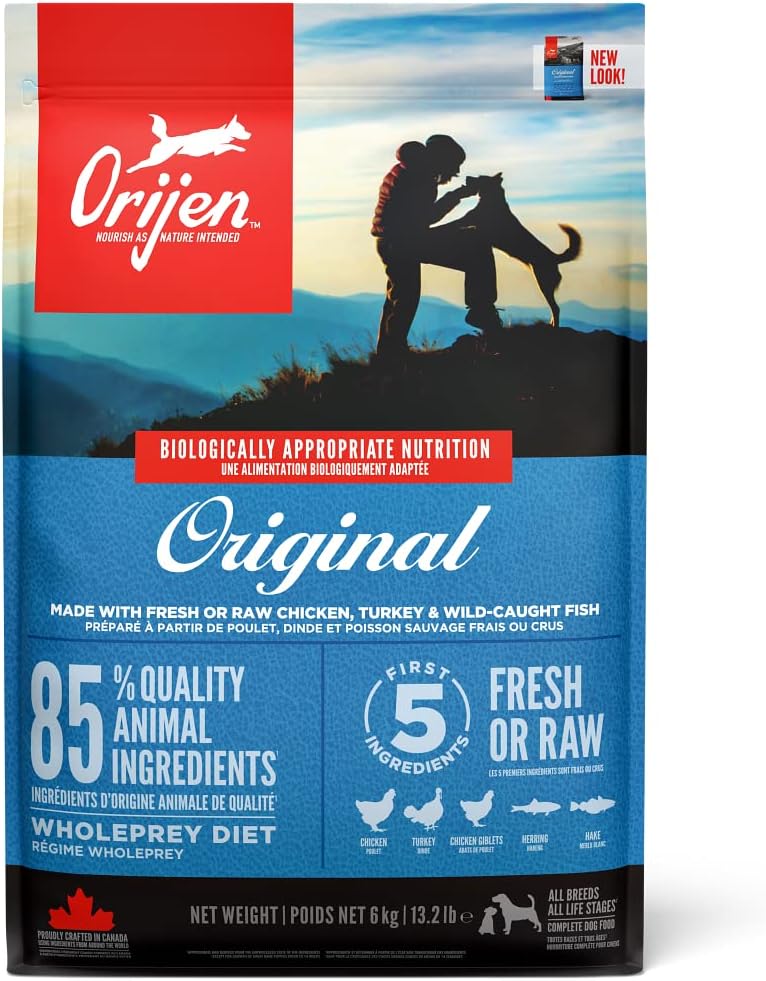
The Orijen panel gives no percentages inside the ingredient list at all. It starts with boneless chicken, chicken meal, chicken liver, whole herring and boneless turkey, and an asterisk marks ingredients the maker calls fresh and preservative-free. The only quantity is a bullet claiming meat content of 80%. Treat that as the maker's claim, since the panel itself does not let you check it.
Fresh meat, meal and the water problem
Fresh meat is mostly water. Once it is cooked and dried into kibble, a good share of that weight disappears, so a fresh ingredient in first place can overstate how much of the finished food it supplies. Meal, such as chicken meal, is already dried and concentrated, so it can contribute more protein per gram. Neither is automatically better. Meal is a legitimate ingredient, and a recipe with only fresh meat listed is not necessarily meatier.
Watch for ingredients that are split into pieces. Orijen lists red lentils, green peas, green lentils, chickpeas and pea fibre as separate lines. Added together, legumes may weigh more than any single line suggests. That is not a fault in itself, but it is worth noticing when a pack leans on meat in its marketing.
The nutrient table and what "crude" means
The analytical constituents list the percentages of crude protein, crude fat, crude fibre, crude ash and sometimes moisture. "Crude" describes the laboratory method, not the quality. Ash is simply the mineral residue left after burning a sample. These figures let you compare foods on the same basis, but only if both are quoted "as fed", and a wet food will always look lower in everything because most of its weight is water.
The listing text we drew on for these three does not reproduce the full tables, so read them from the bag. One figure that does appear is calories: Harringtons gives 340 kcal per 100g. Energy density matters because the amount you pour depends on it.
Using the feeding guide without trusting it blindly
Feeding guides are a starting point. Harringtons shows bands: 65 to 180g a day for 3 to 10kg dogs, 180 to 360g for 10 to 20kg, 360 to 540g for 20 to 40kg, and 540g or more above 40kg. The bands are wide because age, breed and activity all change the answer, and the listing suggests adding 10% for active dogs. Burns gives one range, "400-600g per day", with no weight bands in the listing text. Orijen only says to adjust portions for weight and age.
Start at the middle of your dog's band, then watch body condition and adjust. Count treats too. To compare running costs between foods, divide the pack price by the number of days a bag lasts at the recommended amount, rather than comparing price per kilo.
Words that sound like label facts but are not
"Natural", "premium", "hypoallergenic" and "biologically appropriate" are marketing terms rather than measurements you can verify on the bag. The Burns listing calls itself hypoallergenic, and our piece on what hypoallergenic does and doesn't mean covers why that deserves a closer look. The same goes for grain-free, which we unpick in grain-free or grain-inclusive. If a recipe is expensive, is premium dry dog food worth it looks at what the extra money does and does not buy.
When to stop reading and ask a vet
A label cannot tell you what your individual dog needs. If your dog has a diagnosed condition, a suspected food allergy, a weight problem, or is pregnant, ask your vet before choosing, because this guide is general information rather than veterinary advice. Once you have chosen, change foods slowly, and our guide on how to switch your dog's food sets out how.
Products in this article


Affiliate links — we may earn a small commission at no extra cost to you.